


There are a great many uncertainties in the world of wine, but of one thing you can be sure: no two vintages will be the same. It is one of the things that distinguishes wine from Coca-Cola, and we say that this reminder that wine is a moving target, ever susceptible to the vicissitudes of nature, is something we treasure. But we find it hard not to make comparisons, and that is but a small step from assigning rankings.
The early talk from Barolo was of a trio of beautiful, back-to-back vintages. 2019, ’20 and ’21 each with its own character and all with plenty to admire. 2019 had a year’s head start on its next closest contender, and it made the most of that competitive advantage in the marketplace. Then came 2020, with its consistently warm summer yielding healthy, ripe fruit with fresh acidities and convincing tannins. Happy days—and a promising outlook for closing the gap on 2019. But the ageing requirements of Barolo (DOCG rules stipulate a minimum of 38 months) meant the hype of a spectacular 2021 harvest rained on 2020’s parade long before it got its day in the sun.
Well, it’s not too late to give 2020 its due. I had a great time this last week putting it under the microscope alongside Giuseppe Vaira of the G.D. Vajra estate in Vergne. Big disclaimer: I was travelling with Giuseppe on a trade trip from Melbourne to Brisbane via Sydney, because I work for his Australian importer. Anyway, this gave rise to some fascinating conversations, one of which has been recorded for your pleasure as episode 35 of the Vininspo! podcast. It also gave me a chance to pick up some interesting insights into 2020 while checking how they translated to the wines.

First, the winery’s official overview. The season started with an anticipated bud break and slowed down throughout spring and summer. An abundant flowering began on 12th May, then numerous rain events, well into July, resulted in a less regular fruit set. This led to extra hard work in the vineyards for an estate that has been farmed organically since 1971. Milder temperatures through the ripening period led to a later harvest than might otherwise have been expected.
Of course, we’re right to take a producer’s vintage report with a grain of salt. Viewed retrospectively, when telling would-be buyers how the year panned out, a grower can be forgiven for donning spectacles with a degree of rose tint. However, nor is a third party’s verdict infallible. Commentators’ reports are not created equal and can be a useful puzzle piece. But they inevitably turn an intensely specific subject into something blandly general. Barolo is small, yet it’s faintly ludicrous to laud its extraordinary subregional and site-specific variation while tarring it all with the same brush.
Wine-buyers flicking through these summaries similarly seem to like a one-word signpost to navigate what was a maze of weather events, viticultural responses and winemaking decisions. And then there’s the tendency to conflate difficulty with disappointment. “Often ‘difficult’ gets translated into ‘bad’,” says Giuseppe Vaira. “But if you think about our own lives, at least it is true for me that some of the hardest moments were the moments that made me mature the most.”
To counter, or at least complement this, Giuseppe developed an informal chart that began with doodlings on napkins as he worked out where the wines of a given vintage sat in terms of style. It’s an imprecise science, of course, and the coordinates change as the wines and his reading of them shift. But it gives its own enlightening, multi-dimensional perspective. The image below plots 2020 as he sees it now.
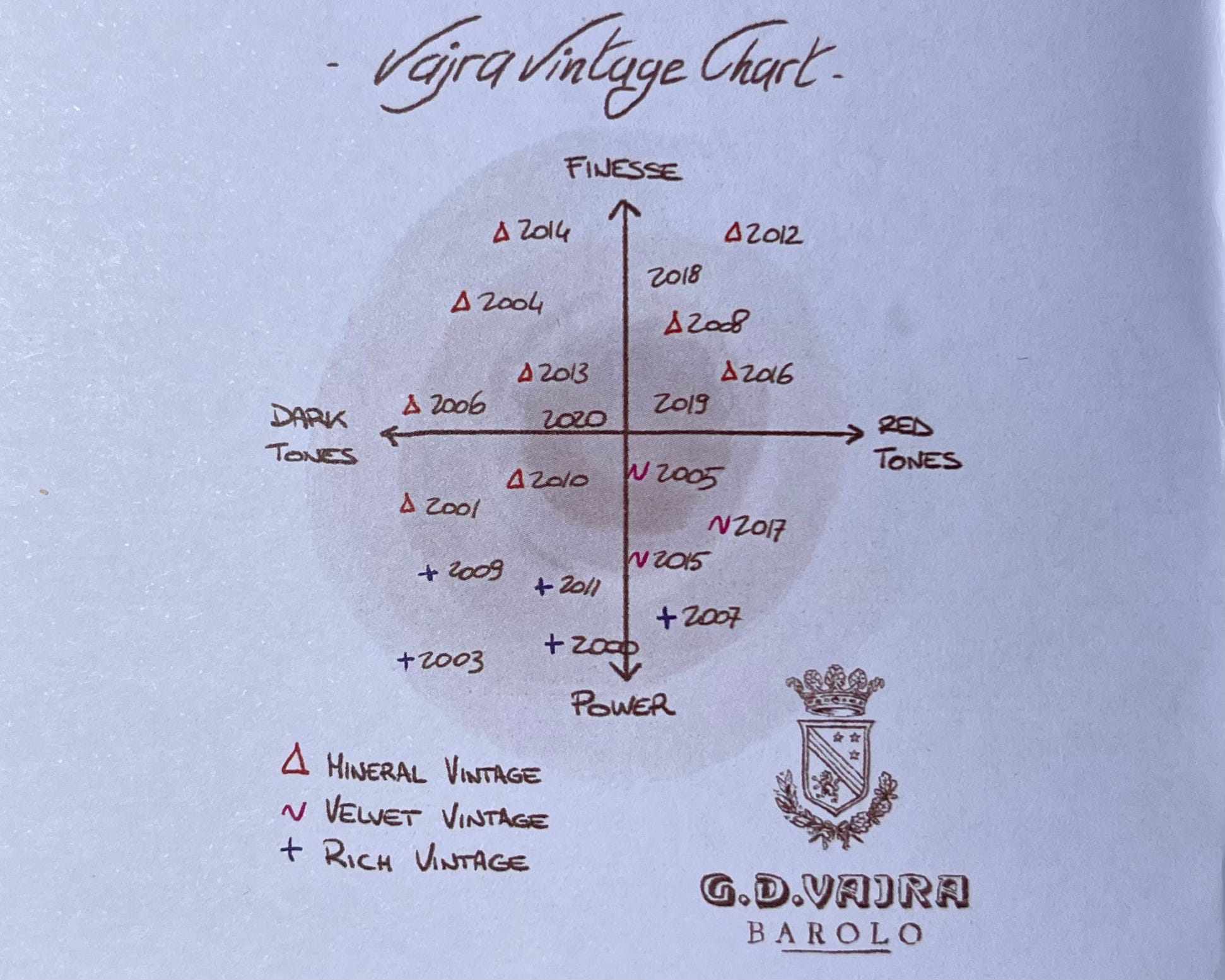
“I’m always trying to look at the angles that no one else is looking at, because, for me, they are some of the most interesting,” says Giuseppe as he reflects on a past harvest. He singles out three particular aspects of 2020 that he thinks are especially telling: flowering conditions, the length of the vegetative cycle and the timing of picking.
“When we have happier flowering, we tend to get fruitier vintages. [2020] was one of the most gorgeous, happy, copious flowerings we’ve ever had in my life, which means the wines are very fruity,” says Giuseppe. Conversely, he feels the vines’ response to disrupted flowering tends to yield more tannic wines, as was the case in 2019. There is no shortage of tannin in 2020, but the wines below are remarkable for their abundance of vivid red fruit.
Then, two points go to the nature of the tannin and the completeness and harmony I saw in the 2020s. Despite the happy flowering, May and June—two of the most critical months for mildew pressure—saw significant rain events. This made things difficult, not least for an organic farm. The estate needed plenty of boots on the ground for painstaking work to stave off the threat, with sprays often applied by hand to avoid the soil compaction caused by machines on these frequently steep slopes.
This rain slowed the season down. The vegetative cycle was 213 days from budburst to picking. “To give you a reference point, the average for Nebbiolo in the region would be around 190 days. A hard, torrid vintage might be as short as 170 days.” So, 2020 saw one of the longest cycles G.D. Vajra has witnessed in recent vintages. By the time the grapes were picked late in the season, there had been plenty of time to build complexity and completeness in the bunches.
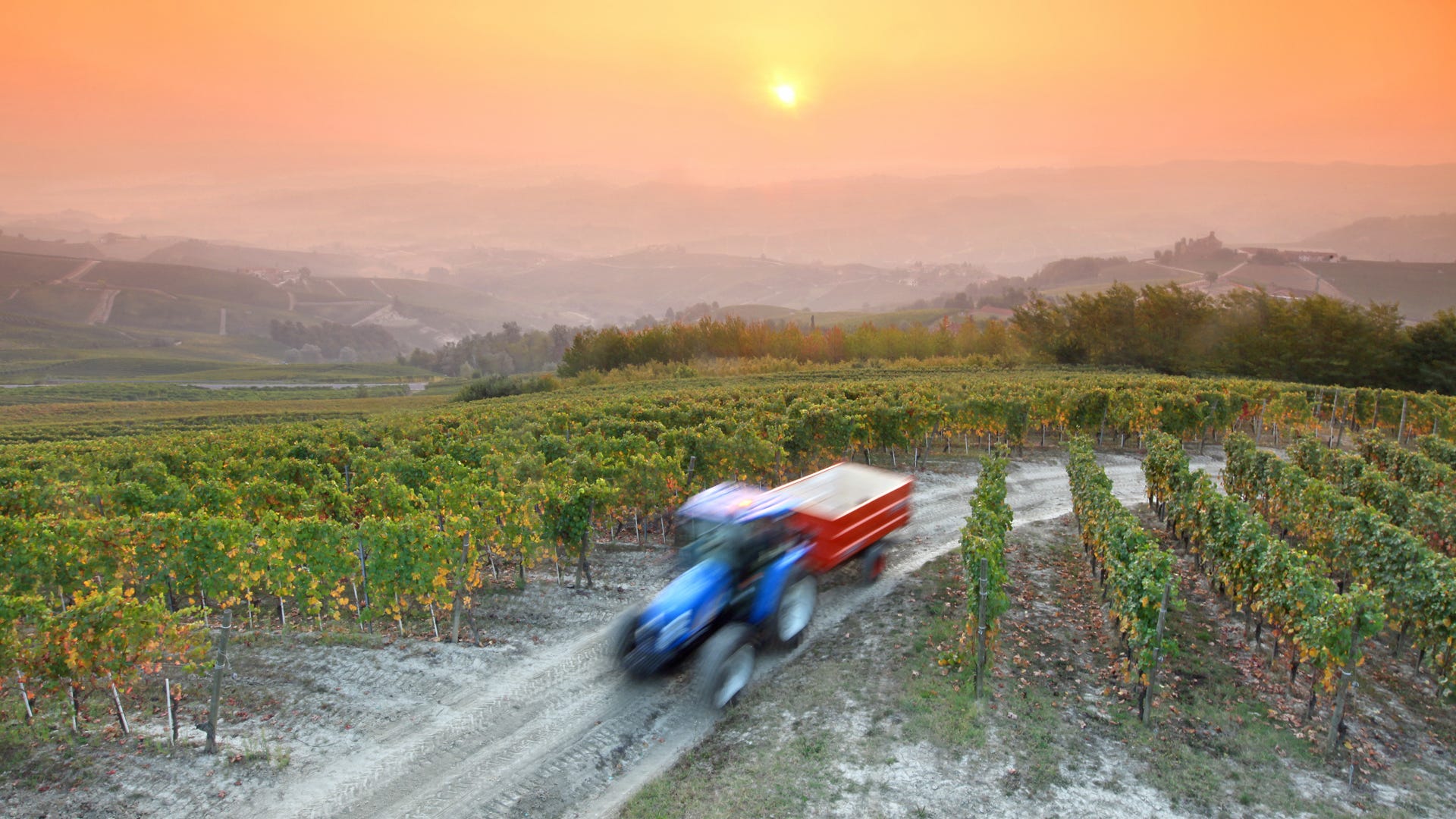
Which brings us to Giuseppe’s final point. “This is one of the most underground polarisations in Piemonte today,” he says. “It is about when to pick the fruit.” With the worldwide pendulum swing away from bigger, riper red styles toward brighter, fresher, crunchier styles, earlier picking has become de rigueur in many quarters.
It’s often a rational choice that yields splendid results. But what are the ramifications in Piedmont? The Langhe routinely experiences rain in late September or early October, as it duly did in 2020. Many choose to harvest before these rains, which signify a striking shift in the season. Wait, and the snowcapped Alps chill winds pushing southwards from continental Europe on bright, clear autumn days. It is no longer hot enough for grape sugars to notably rise or acids to drop, yet this calm extra time on the vine is critical for full phenolic ripeness, says Giuseppe.
This partially explains why the tannins, so central to Nebbiolo’s structural identity, haunting flavours and vineyard DNA, present so beautifully in the following wines.
The Wines
I’ve deliberately included comprehensive vineyard and winemaking notes below to bring more context to the comments above. For all the wines, the fruit is triple sorted: once as bunches in the vineyard, then as bunches on the sorting table, and finally as destemmed berries. (As well as a final check on berry condition, this is because stem strength/fragility in Nebbiolo can be highly variable, Giuseppe says. This impacts the fruit as the bunches go through the destemmer.) The Vaira family believes in long macerations to allow the grape tannins to resolve fully, and they see capello sommerso (submerged cap) as a gentle, freshening and thorough technique.
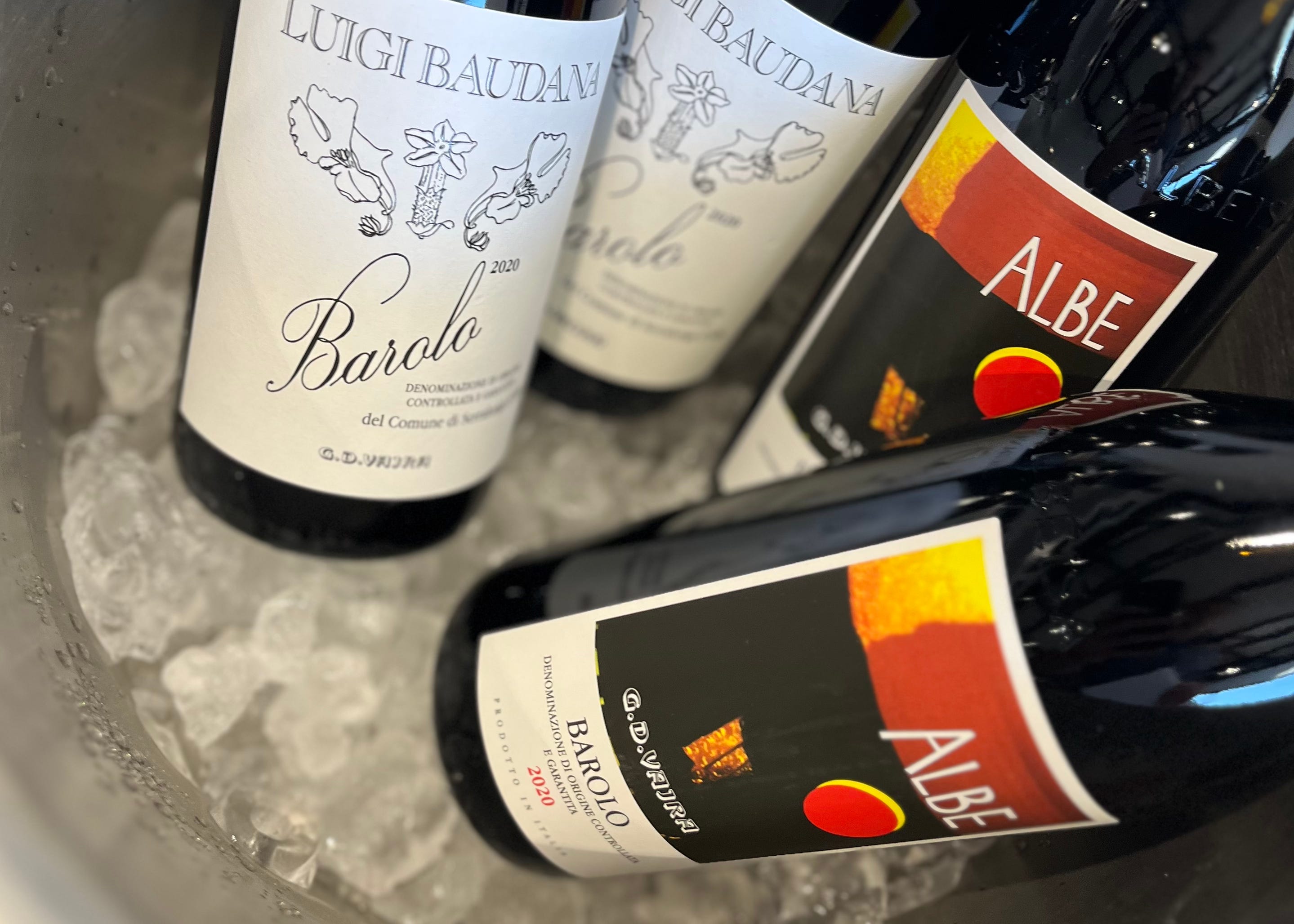
Albe and Luigi Baudana’s Comune di Serralunga, both of which honour the tradition of blended Barolo, are respectively excellent flag-bearers for the region’s west and east. The cru Barolo wines, likewise, are even in quality; nothing catapults itself above the others in 2020. In terms of outdoing itself, maybe Ravera does best… but the Baudana cru is perhaps the wine I found most magnetic.
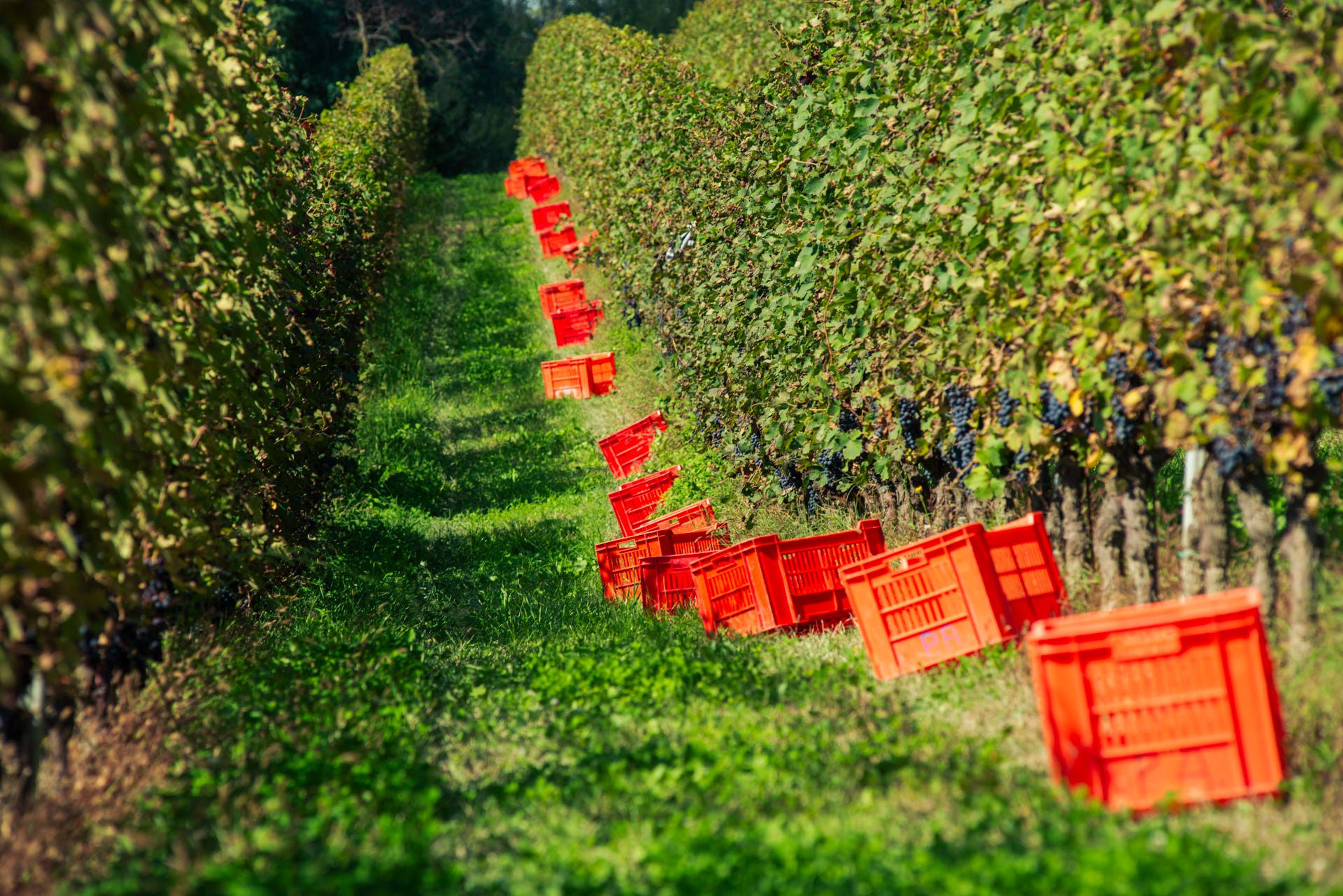
2020 G.D. Vajra Barolo Albe
The wine: This blend is from three vineyards in the Barolo commune, each with a slightly different exposure. Albe means ‘sunrises’; the harvest team will see three separate sunrises in the morning as they shift perspective and the sun peeps above each site’s horizon. The vineyards, all planted on laminated Sant’Agata fossil marls, are: Fossati (east-facing at 400-430 metres above sea level), Coste di Vergne (southwest exposure at 420-460 metres) and La Volta (south-oriented with a smooth 180-degree angle from east to west, at 380 to 420 metres). Harvested between 1st and 14th October. Vinification in custom-designed vertical tini, with gentle punchdown and pumpovers. Time on skins ranged from 27 to 57 days (under submerged cap for the longer macerations). Spontaneous malolactic fermentation in stainless steel in spring, then matured for 26 months in large Slavonian oak casks of 40, 50 and 75 hectolitres. Bottled on 10th July 2023.
Tasting: A clutch of red flowers lifts the glossy, red-berried nose with graphite, juniper, cherry coulis and fresh herbs. It’s immediately supple, confident and neatly layered, with a fine break of sandy tannins that are neither shy nor forceful. The harmony here is excellent; transparent with a lovely rhythm and herb and mineral streaks etched into bright primary fruit. A superb rendition of this always splendid-value wine.
2020 G.D. Vajra Barolo Coste di Rose
The wine: The newest Barolo site in the family fold, with the first wine produced in 2015. The site faces south/southeast at an altitude of 270-310 metres. The soils are Diano sandstones and sandy Sant’Agata fossil marls. The vines were planted between 1995 and 2001. The fruit was harvested on 1st October and vinified in custom-designed tini. Vinification lasted 39 days, eventually under a submerged cap. Spontaneous malolactic fermentation in spring, followed by 28 months in large Slavonian casks of 25 and 40 hectolitres. Bottled on 10th July 2023.
Tasting: Notably aromatic with high-toned red floral and almond blossom notes. Strawberry, all kinds of cherry with blood orange and mint, too. The red-fruited palate is peppy and sleek: bright, fragrant, charming and lent depth by notes of iron and fennel. Prickly, sandy tannins line the gums as this skips through to an energetic finish. Characteristically, this is pure and high-register rather than throbbing with depth, but it’s balanced, buoyant and neatly detailed.
2020 G.D. Vajra Barolo Bricco delle Viole
The wine: Bricco delle Viole—the hill of violets—is a promontory that extends from southeast to southwest, at an altitude of 400-480 metres. The parcel is 9.63 ha, of which 4.5 ha of vines are old enough to produce this Barolo. Various blocks are used, with varying geology and microclimates, with soils of laminated Sant’Agata fossil marls. The oldest blocks were planted in 1931 and 1949. The 2020 was harvested over three days: 7th, 10th, and 13th October. Vinified in custom-designed vertical tini, with gentle punchdowns and rinsing of the cap, followed by an extensive period of maceration under submerged cap (cappello sommerso )that lasted 57 days. Malolactic fermentation in stainless steel in spring, followed by 28 months of aging in large Slavonian casks of 25 and 50 hectolitres. Bottled on 12th July 2023.
Tasting: Fragrant with its familiar violets, rose petals, lavender, raspberry, cherry and blue plum fruit, blood orange, rosemary and almond paste. Typical flow and stretch to its velvet palate, supple tannins with a black-slate inflection, excellent harmony. Not especially tense, but enticing and threaded with detail throughout its long, effortless trajectory. So classy, and a sense it has a long, leisurely way to go.
2020 G.D. Vajra Barolo Ravera
The wine: This is regarded as the finest site in the commune of Novello. It is an amphitheatre whose exposure curves from south to southeast. Soils are laminated and sandy Sant’Agata fossil marls, plus Diano sandstone. There is a strong presence of manganese and iron oxides. The age of the older vines is unknown—possibly 45-50 years. The younger plantings date back to 2000. The 2020 Ravera grapes were harvested on 5th and 6th October. Vinification was carried out in vertical tini, with gentle punchdowns and rinsing of the cap, and lasted 55 days, including a submerged-cap maceration. Spontaneous malolactic fermentation occurred in spring before ageing for 28 months in large Slavonian casks of 25 and 50 hectolitres. Bottled on 11th July 2023.
Tasting: Primary red fruit alongside coulis and fruit paste, satsuma, menthol, liquorice, terracotta and rusty nail. More matte than the gloss of the preceding Barolo wines, and a more horizontal aromatic impression. Zesty and animated on entry, though, and dense, fine-meshed tannin clamps warmly. Authoritative and complex without heaviness, this is true to the site without stinting on liveliness and pleasure.
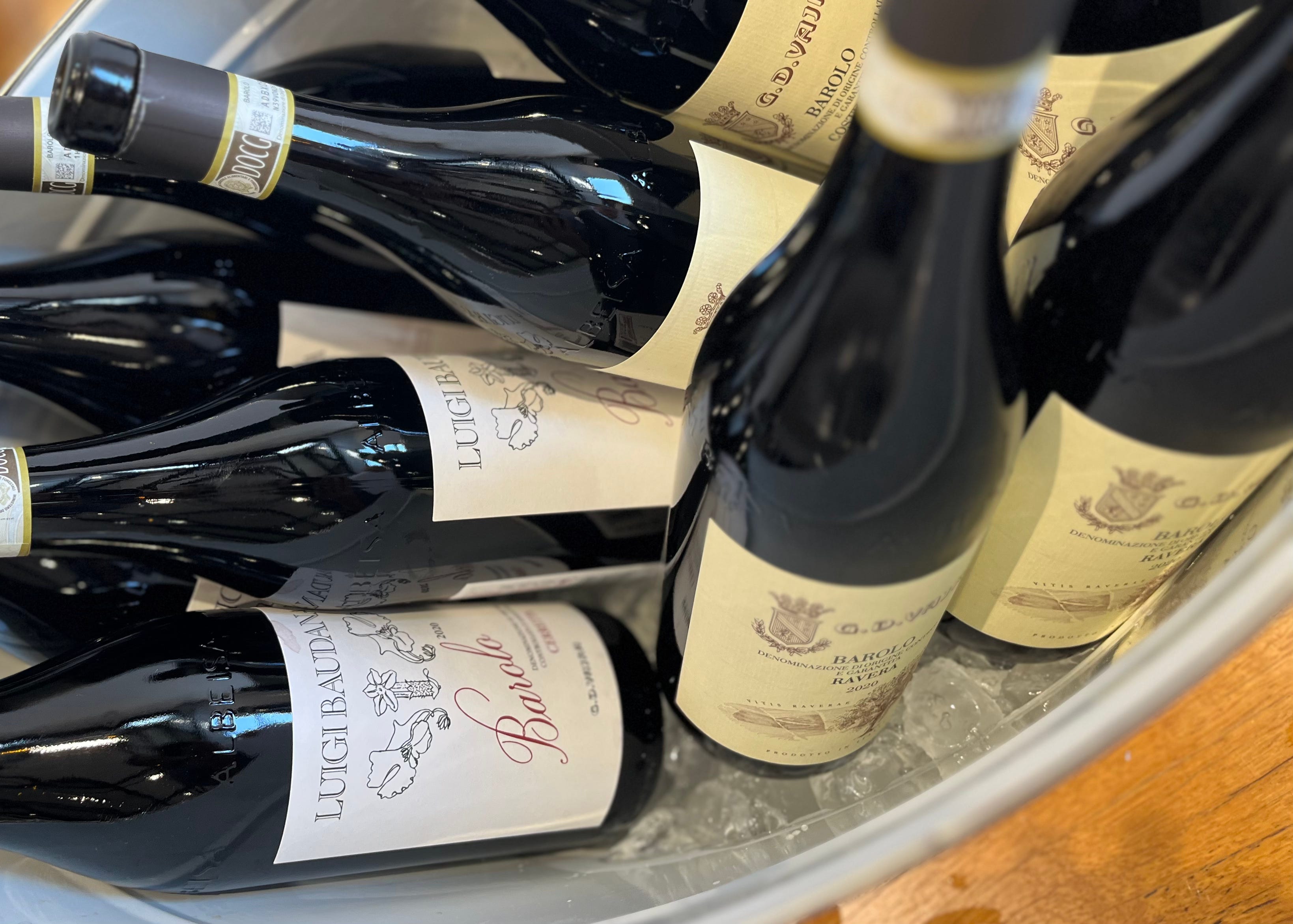
2020 Luigi Baudana Barolo del Comune di Serralunga d’Alba
The wine: This is a blend of three vineyards: Baudana, Cerretta (see below) and Costabella. Costabella is exposed west-southwest at 260-300 metres on typical Sant’Agata fossil marls with a rather sandy topsoil and bluish clay beneath. The vines are about 30 years old. In 2020, the fruit was picked on 9th October. Vinification took place in vertical tini, with gentle punchdowns and rinsing of the cap. Maceration lasted 50 days on average. Spontaneous malolactic fermentation in spring followed by 24 months’ ageing mainly in Slavonian casks of 15, 17, 25 hectolitres and a few neutral barrels. Bottled on 13th July 2023.
Tasting: Red berries touching red plum, pressed roses, orange rind, sage, chestnut and wet clay. A poised and nicely layered palate meshed with fine, silty tannins. There’s a sweet innocence to this, but it’s far from simple. A sweeping, charming finish with a ring of peach tea. Very together and lovely.
2020 Luigi Baudana Barolo Baudana
The wine: The parcels are at 230-370 metres with exposures from west to southwest. The old block dates back to the mid-1950s and the young block from the mid-1990s, with a partial regrafting in 2004. The two parcels feature two different soil types from different epochs: typical Sant’Agata fossil marls and Formazione di Lequio of Serravallian origin. The 2020 was picked on 9th October. A delicate fermentation in open-top tini was followed by submerged cap maceration for 51 days. Spontaneous malolactic fermentation in spring, followed by 24 months’ ageing in custom-made Slavonian casks of 15, 17 and 25 hectolitres. It was bottled on 10th July 2023.
Tasting: A precise nose with red flowers, cherry blossom, strawberry, peach, mint and almond meal. Beautiful freshness on the medium-bodied palate, whose fine, powdered-chalk tannins run from front to back as the wine travels with a pure, juicy yet trimly cinched flow. This has beautiful freshness to its red fruit, with a light mineral kick and cherrystone tang to the finish. Riveting and charismatic.
2020 Luigi Baudana Barolo Cerretta
The wine: The vines are at 250-395 metres of altitude and date back to the mid-1970s. The site is exposed to the south and southeast on Formazione di Lequio soils. Vajra farms two blocks: the first, very steep and thin, on very pure Formazione di Lequio; the second sits where these merge with the Diano formation and typical Sant’Agata fossil marls. 2020 Barolo Cerretta was picked on 9th October. Fermentation was followed by submerged cap maceration for a total of 50 days. Punchdowns and gentle pumpovers during maceration. Spontaneous malolactic fermentation in spring followed by 28 months’ ageing in large, custom-made Slavonian oak casks of 15, 17, 25 hectolitres. Bottled on 10th July 2023.
Tasting: Presents a broader nose than the Baudana cru, red fruit dipping slightly into black with dried citrus peel, mint, tobacco and an almost creamy (not oak) layer giving it a slick veneer that differs from the more visceral Baudana. Very good intensity of cherry fruit and pliant, sandy tannins that build to a thick blanket towards a substantial finish where more spice and liquorice chime in.
Wow, that’s one person more than I thought would actually read this! Thank you for the comment. Giuseppe paints the flowering point as something of a hunch, but it makes sense—weather that is “good, warm, pampering and easy” triggering a plant’s instinct to blossom fully (even though fruit-set was later disrupted) as opposed to drought, stress, etc triggering a slightly defensive response, holding back energy (fewer and smaller eventual berries, meaning more tannin relative to juice). On picking, Alessandro Masnaghetti (he of the brilliant MGA maps) collates that data Giuseppe shared on the distribution of harvesters on different dates, and how that fits with rain events and the 10-year average. One might be tempted to think hangtime means more fruitiness in a “fruity” vintage, but Nebbiolo’s tannins offset the fruit, and there’s nowt so lovely as ripe tannins. Interesting, though, to make the point that the alpine snow allows that to happen (plus the retention of tension from the acids) without excess sweetness.